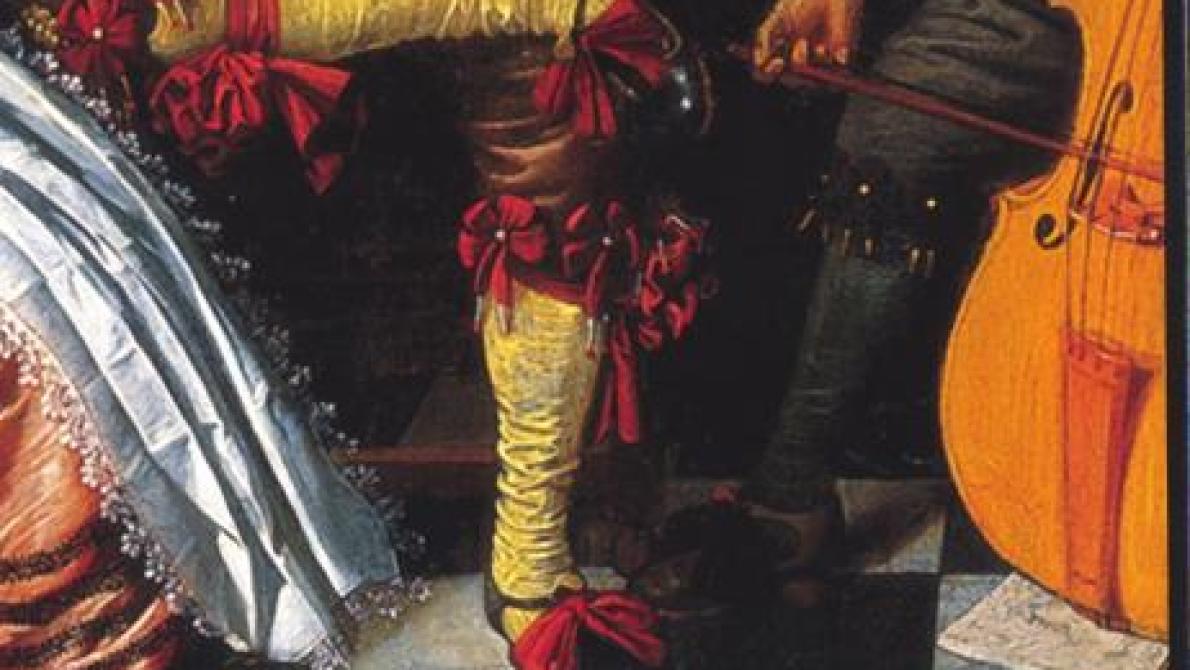
The Cello’s Evolution in Italy
Italy is often considered the birthplace of the cello. From the early 16th century onward, the first traces of the violin family can be found there, with important centers in Milan, Mantua, Ferrara, and Venice. Initially, the cello was part of ensembles of three to six string instruments of different sizes, performing dance music and providing entertainment at Italian courts. During the Baroque period, however, the instrument gradually gained prominence as a solo voice.
It was in Emilia-Romagna - particularly in Bologna and Modena - that the first true sonatas for cello were composed. Soon after, the Neapolitan school introduced the “thumb position,” enabling the instrument to reach higher registers. Pergolesi and Lanzetti, both trained in the Neapolitan conservatories, were among the notable composers and instrumentalists of the early 18th century. Lanzetti later brought his expertise to England via Paris, where he impressed audiences at the Concert Spirituel in 1736 - the same public that had enthusiastically received Vivaldi’s Four Seasons in 1728.
The cello sonata reached its artistic peak with Luigi Boccherini. Considered, alongside Mozart and Haydn, one of the great composers of the Classical period, he helped lay the foundations of modern cello technique together with several other cellists of his time.
Musicians
- Anna Liets - cello
- Marie Ponseele - cello
- Dominiek Riepe - harpsichord
Programme
Music by G. B. Pergolesi, S. Lanzetti, A. Vivaldi, and L. Boccherini.